
India's maiden mission to Mars has traversed beyond the sphere of influence of Earth extending about 9,25,000 km in its 10-month long voyage to the red planet.

India scripted history by successfully launching EMISAT, a military satellite, and 28 foreign nano satellites on-board its polar rocket from Sriharikota on Monday, in a complex mission which marked many a first for Indian Space Research Organisation.

Thirty-four years after he traveled to space, Wing Commander Rakesh Sharma tells Rediff.com's Archana Masih that he looks forward to Gaganyan, India's first manned space mission in 2022.
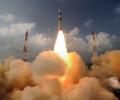
The second orbit raising manoeuvre of India's Mars Orbiter spacecraft was performed in the early hours of Friday, three days after its successful launch by PSLV C-25 into orbit around the Earth.

The landing on the moon near the South Pole, an uncharted territory so far, would be on September 6 or 7, Sivan told reporters, as the Indian space agency is all set to embark on its most complex mission.

ISRO is focusing on more launches including that of a communication satellite from French Guiana next month.

More and more women are making their presence felt in jobs related to sciences, technology, and engineering across organisations.

What looks like convenience today might well be shaping a future where essential human skills quietly fade away.

Officials of the Bengaluru-headquartered space agency said the first and second waves of the pandemic have "severely affected" the Gaganyaan programme.

The Vikram Moon Lander, named after the father of India's space mission Vikram Sarabhai on his birth centenary year, is scheduled to touch the lunar surface near its south pole on September 7 about 1.55 am.

The countdown began at 6.27 am for the launch on board ISRO's third generation workhorse Polar Satellite Launch Vehicle, in its 47th flight, ISRO said.

Arianespace launch vehicle Ariane-5 VA-231, carrying GSAT-18 along with co-passenger Sky Muster II for the Australian operator nbn (National Broadband Network) was scheduled for launch at 2am on Wednesday.

Nibe Space (NSPL), a subsidiary of Nibe, announced its vision to establish India's first multi-sensor, all-weather, high-revisit Earth observation satellite constellation. Aiming to strengthen India's self-reliance in the strategically crucial defence-space sector, NSPL signed memoranda of agreement with Indian and global partners, including Larsen & Toubro, Centum, AgniKul, Skyroot Aerospace, SpaceFields, SISIR Radar, CYRAN AI Solutions, and Thales Alenia Space as a technology partner.

After the successful deployment of Chandrayaan-3's lander and rover on the moon, Indian Space Research Organisation (ISRO) is hoping that their mission life will not be limited to one lunar day or 14 earth days, and that they will come back to life when the sun again rises on the Moon, to carry on with the experiments and studies there.

As India prepares to launch its Rs 450 crore mission to Mars this year, a top space official says the country's first martian odyssey -- that has attracted some criticism -- is not just for pride but for undertaking "meaningful research".

'What is the future of ISRO?' Professor Rao asked from his hospital bed. 'What we see now is the continuation of programmes we started long ago.' 'What are we planning in the space science arena?' 'What is our plan for human space flight?' Former ISRO chairman Madhavan Nair recalls his last meeting with Professor U R Rao, the pioneering Indian space scientist who passed away on Monday, July 24.

Her comments came amid the ongoing war of words between India and Pakistan ever since India withdrew Jammu and Kashmir's special status and bifurcated it into two union territories on August 5.
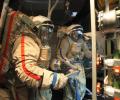
The Gaganyaan project has the objective of demonstrating human space flight capability to Low Earth Orbit with three crew members in orbit and safely recovering them after the mission.

This is ISRO's new record of launching 20 satellites, including those from the US, Germany, Canada and Indonesia.

A recap of events that occurred in India in the past 24 hours.

Experts said India has possessed the anti-missile technology for several years but needed the political go-ahead to actually test it in live conditions.

Indian Space Research Organisation's Mars Orbiter, which was placed in inter-Mars trajectory in the early hours on Sunday, has crossed Moon's orbit and is travelling beyond Earth's natural satellite.

'Today, let us reaffirm our commitment to strive to realise Gandhiji's dreams. His watchwords, truth and nonviolence, will continue to remain relevant for the whole world. He also taught us that rights and duties are but the two sides of the coin - indeed, the true source of rights is duty. Today we recall his lessons in compassion too - compassion not only for our human neighbours but also for our other neighbours, namely, flora and fauna, rivers and mountains.'

The Indian Space Research Organisation successfully put India's heavy rocket Geosynchronous Satellite Launch Vehicle-Development 5 (GSLV-D5) into orbit from the spaceport at Sriharikota, Andhra Pradesh at 4.18 pm on Sunday.

The rocket is almost 49 meters high -- as much as a 17-floor building. It weighs 415 tons -- as much as the combined weight of 80 full grown elephants.

ISRO Chairman K Sivan described the GSAT-11 as the "richest space asset" for India.

The ISRO is strengthening 'eye in the sky', which helped the Indian army carry out surgical strikes last year, with the launch.

'There's nothing like failure in science, we experiment & we gain'

NASA posted images clicked by its Lunar Reconnaissance Orbiter camera, showing the site's changes on the Moon and the impact point before and after the spacecraft had made a hard-landing on the lunar surface.

"It is going to be the most complex mission ever undertaken by ISRO. It is going to take place between July 9 and 16, this year," Sivan said, addressing scientists from the Mission Control Centre.

India and France on Friday signed 17 agreements, including on the stalled nuclear project in Jaitapur in Maharashtra, after Prime Minister Narendra Modi held wide-ranging talks with French President Francois Hollande.

"I remember Chandrayaan-2's launch was earlier scheduled on July 15. I was there in Sriharikota. I saw the massive carrier, 'Bahubali', from close proximity.

The US astronaut reflected on the importance of international cooperation in space missions like these.
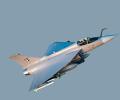
'An HAL-private sector tieup is a possibility.'

India's heavy-lift rocket GSLV MkIII, carrying communication satellite GSAT-19.

India is now on the Moon and the success of the lunar mission has sounded the bugle for the emergence of a developed nation, Prime Minister Narendra Modi said on Wednesday as Chandrayaan-3 landed successfully on the lunar surface.
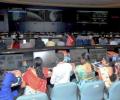
"Progressively, you can imagine that it becomes that much more difficult, with each passing hour, the available power on the battery gets drained out, and there won't be anything left for it to power and operate", an ISRO official said.

'We have all the technologies available, but it should be converted to something that can be commercially viable.'

Debates on changing the name of India to Bharat continue to spark a crisis of identity without answering moot questions that stare us in the face. Ramesh Menon asks a few of those questions that do not have easy answers.
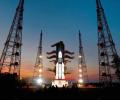
Despite the odd time, hordes of enthusiasts had reached the island, some of them travelling long distances on two wheelers, to witness the historic moment.
